
Color paperback
A 508-page reference, with diagrams, code, and structured examples. 6 × 9 inches, standard-color interior on white paper.
Forthcoming on Amazon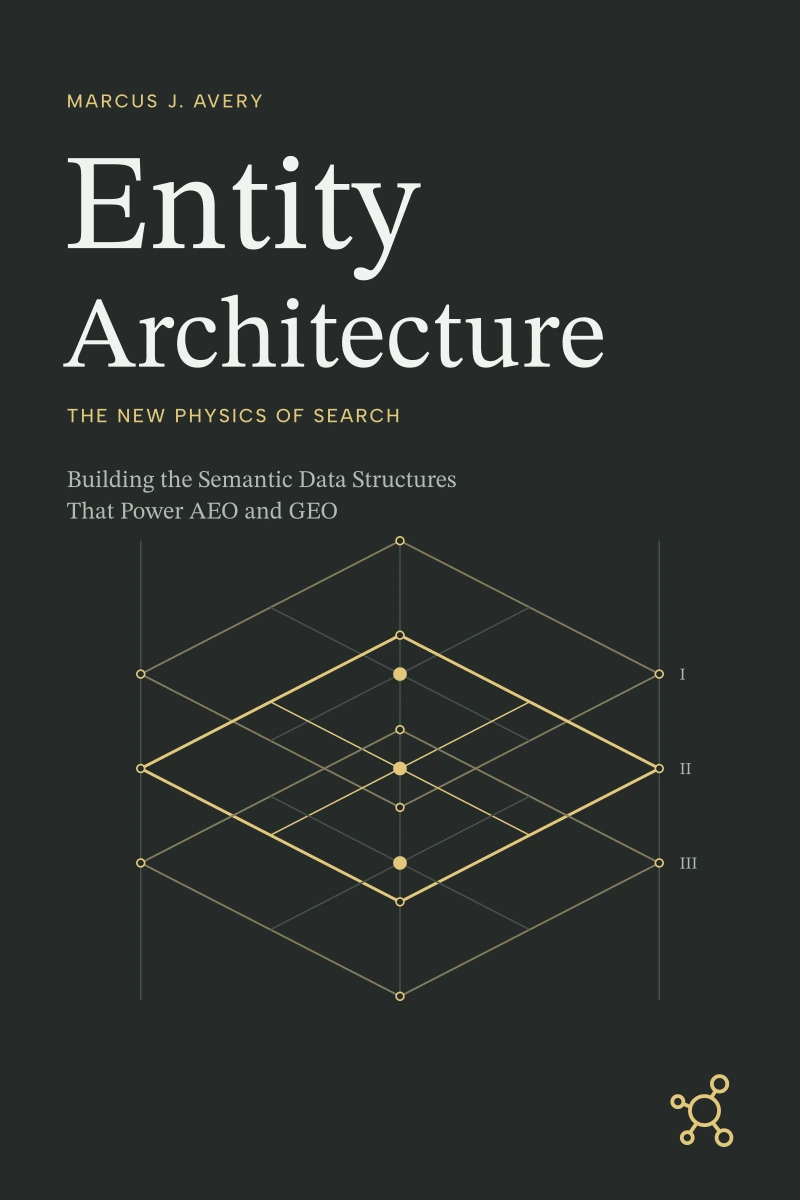

A Node Publishing title · Marcus J. Avery
The New Physics of Search
Building the Semantic Data Structures
that Power AEO and GEO
Paperback and Kindle editions forthcoming.
The premise
An entity gains meaning through its attributes, its context, and its connections. The book follows that idea into the systems that discover, interpret, and retrieve information.
Across theory, architectural engineering, and operational execution, Entity Architecture examines how the structure of a digital asset affects its interpretation by search engines, answer engines, and generative retrieval systems.
Written for technical SEO practitioners, developers, and content architects who want to connect the underlying models to the work of implementation.
Inside the book
Twelve chapters in three internal volumes.
One connected reference.
Also included
Schema Template Library · The Topical Map Workbook · Glossary · References
The editions
Purchase links will appear here when the Amazon listings are confirmed.
A 508-page reference, with diagrams, code, and structured examples. 6 × 9 inches, standard-color interior on white paper.
Forthcoming on AmazonDigital
A reflowable edition for Kindle readers and apps. Text adapts to the screen and the reader’s preferred type size.
Forthcoming on Amazon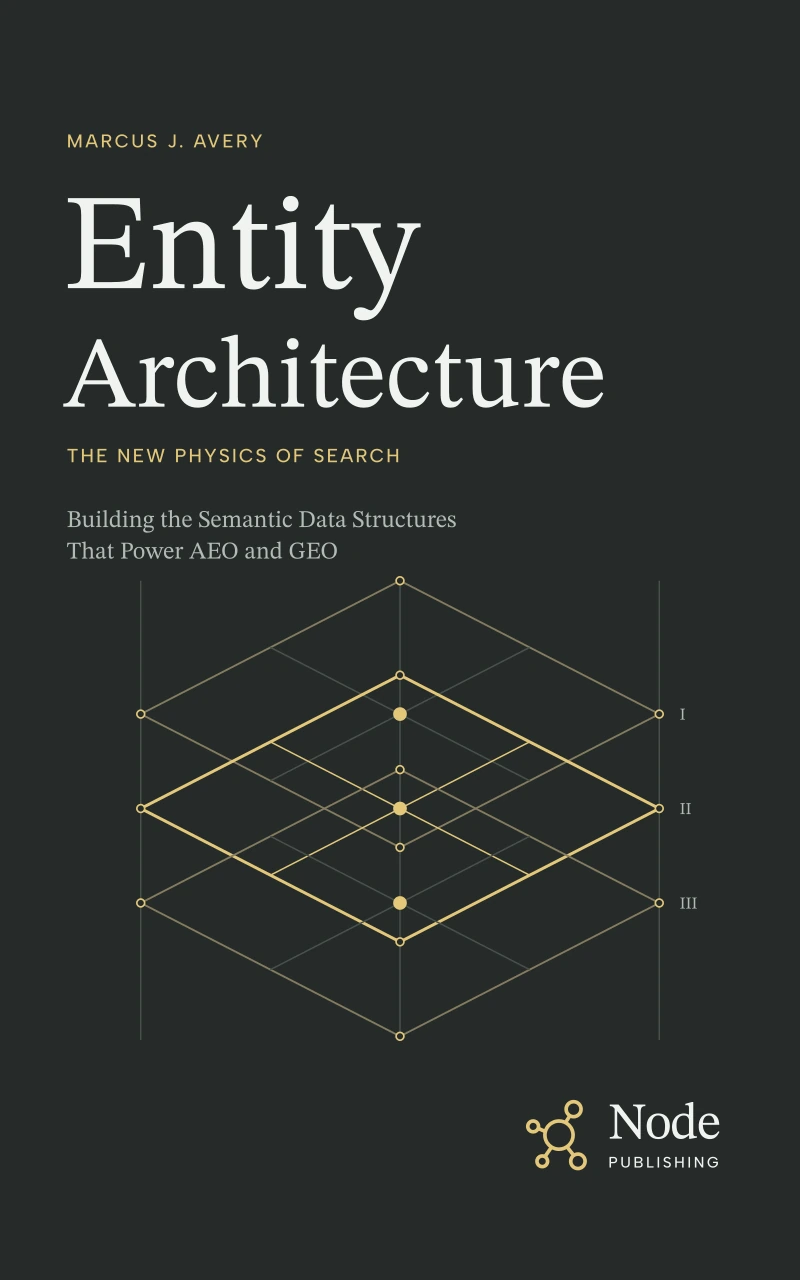
This website does not process purchases. A direct PDF edition and hardcover are not offered here.
Reader questions
Technical SEO practitioners, developers, and content architects who want to understand and implement entity-based search architecture. It assumes familiarity with websites and search optimization; some chapters include code and mathematical models.
One book. Its twelve chapters are arranged in three internal volumes: theory, architectural engineering, and operational execution.
A 508-page, 6 × 9-inch color paperback and a reflowable Kindle edition. Purchase links will be added when the Amazon listings are confirmed. Node Publishing does not sell a direct PDF edition on this website.
The reader resources and errata pages are the permanent home for public companion links and published corrections. Both are linked below and in the footer.
No. It presents models, implementation methods, and diagnostic frameworks. Search visibility depends on the system, the content, and the context; no specific ranking or citation result is guaranteed.